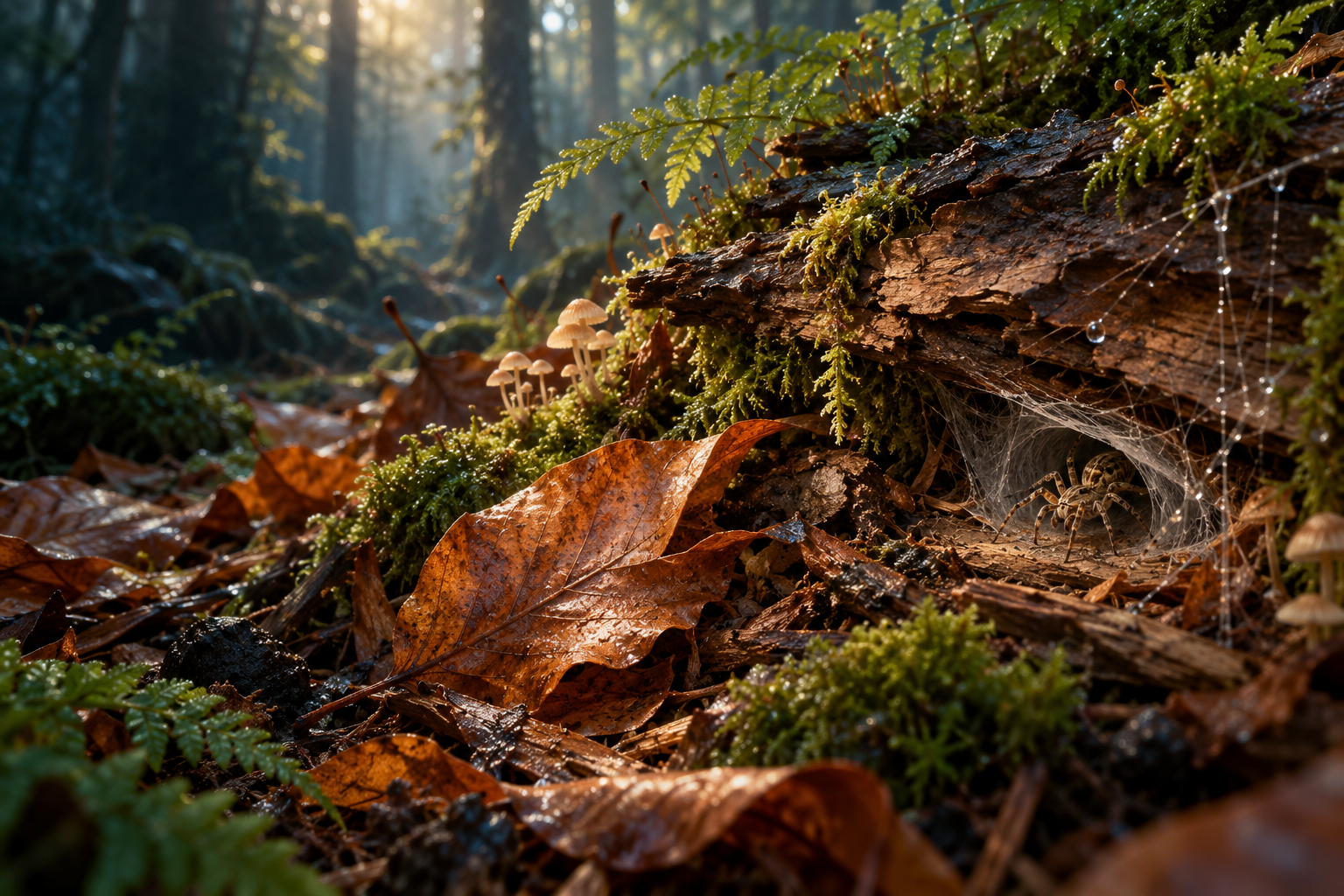
A few centimetres can matter
Conditions beneath bark differ from those on its sunlit outer surface. Moisture, temperature, wind and shelter vary over short distances. Ground hunters, bark dwellers and web builders consequently use different parts of one landscape. Gardens can contain many such small habitats even when they appear to people as one simple area.
Web sites are resources
A web needs attachment points and access to potential prey. A retreat may provide additional protection. Running hunters do not require a permanent capture web at one site, but they also use cover. Examining habitat helps explain why nearby spiders can live differently. Not every apparently empty gap offers equivalent conditions.
Keeping habitats available
Vegetation, leaf litter and suitable retreats offer space for different species. Removing every hiding place changes those conditions. In a garden, less-disturbed patches can retain structure. No single action guarantees a particular spider. We observe what actually occurs rather than declaring one decorative feature a universal solution for all species.
Sources & image credits
- Australian Museum · Spiders ↗
- Australian Museum · Huntsman spiders ↗
- Australian Museum · Wolf spiders ↗
Sources checked: 1 November 2026. Figures and records carry the qualifications stated in each article.