The surface as an information space
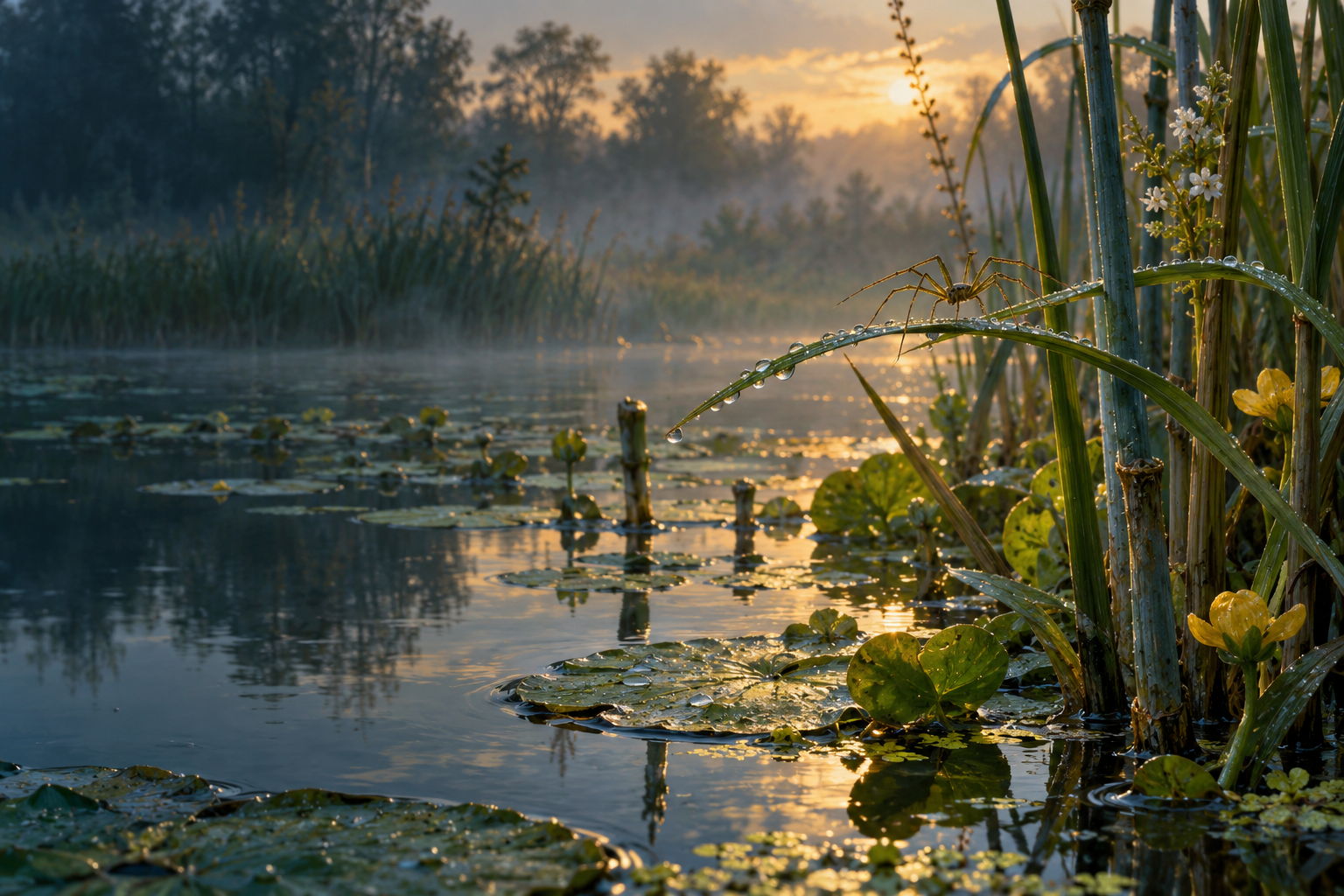
At water margins, terrestrial and aquatic worlds meet. Some hunting spiders detect movements through the water surface, and prey can become accessible from both environments. A shore is therefore more than a line on a map. Vegetation, exposed patches and water level shape the positions available for waiting or moving.
A special case with a diving bell
Argyroneta aquatica takes a different route, using silk to create an underwater air space. Oxygen exchange in its bell has been studied experimentally. This lifestyle should not be attributed to every spider near a pond. Walking on water or hunting along a bank does not by itself identify the diving-bell spider.
Documenting connections
Useful observations include substrate, vegetation, behaviour and weather. Was the spider submerged, or on a leaf above the water? A photograph often shows only a fragment. Connecting the portrait to its habitat without identifying a species solely from location produces a more accurate picture of relationships around water.
Sources & image credits
- Australian Museum · Prey capture and feeding ↗
- Seymour & Hetz (2011) · The diving bell and the spider ↗
Sources checked: 1 November 2026. Figures and records carry the qualifications stated in each article.