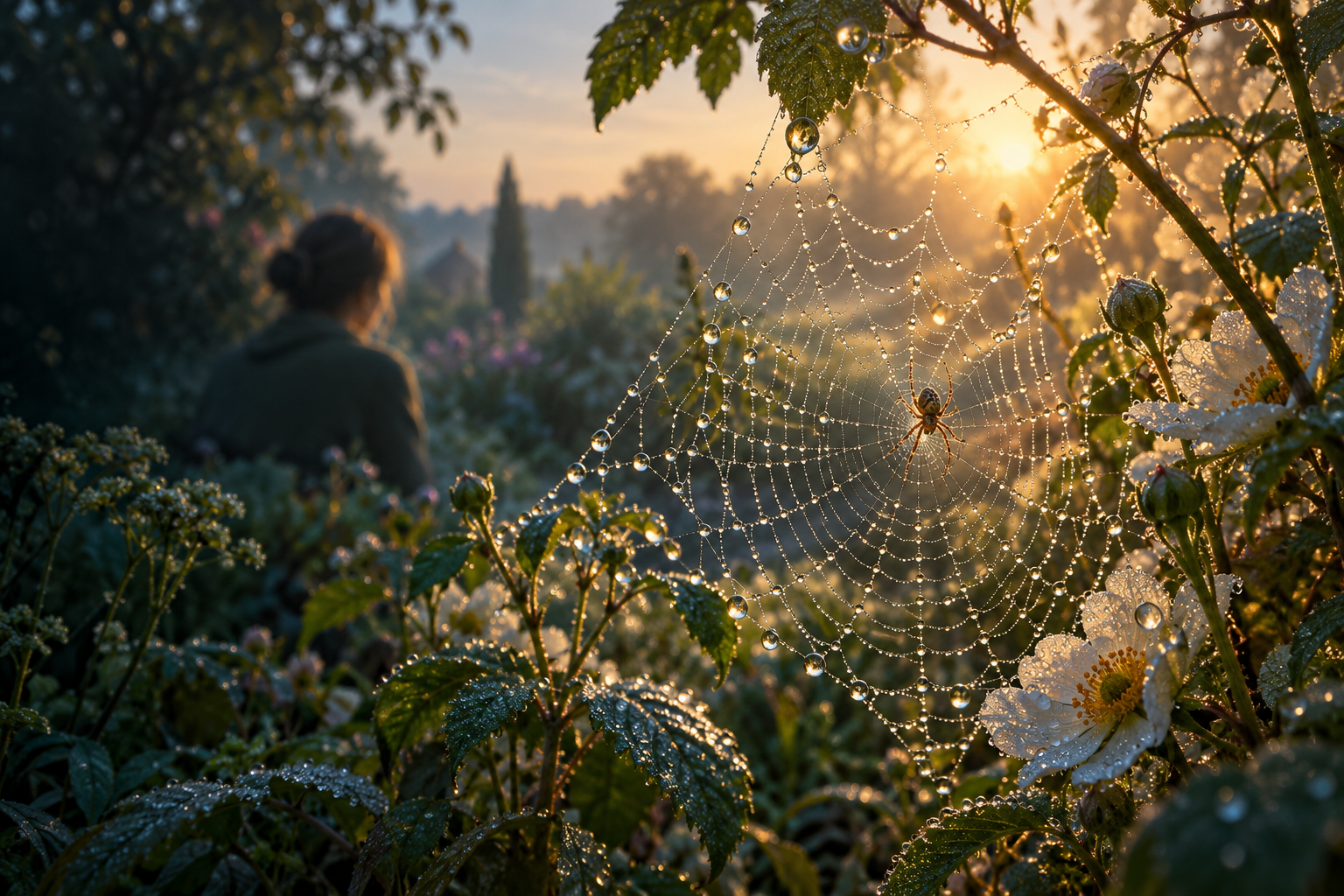
Observation starts with patience
We may first notice a web, a shed cuticle or a retreat. Watching from a distance reveals changes over time. Touching threads, opening shelters or crowding an animal changes the behaviour we want to understand. Egg sacs and moulting animals especially deserve restraint. A photograph is not a reason to provoke a defensive response.
Making a useful record
Date, region, habitat and behaviour make a photograph more informative. Body length and leg span remain separate measurements. Do not handle an unfamiliar animal merely to measure it. A cautious group-level identification is useful even when the species remains unknown. Artistic images here can inspire interest but cannot replace a specialist identification.
Coexisting responsibly
Spiders are part of food webs and also inhabit gardens and buildings. Responses to a find depend on place and circumstances. This site provides natural-history knowledge rather than diagnosis of a suspected bite or handling instructions for medically important species. Project questions and corrections can be sent to web@spiders.fyi. Precise observations help us improve explanations together.
Sources & image credits
- Australian Museum · Spiders ↗
- Australian Museum · Egg sacs, spiderlings and dispersal ↗
- Australian Museum · Spider bites and venoms ↗
Sources checked: 1 November 2026. Figures and records carry the qualifications stated in each article.