Already a small spider
A newly hatched spider is not a caterpillar. It already has the basic spider body plan, although it still has to grow and develop. Depending on the species, young remain inside or near the egg sac for a period before dispersing. The number and duration of developmental stages vary, so one timetable cannot describe every spider.
A new cuticle
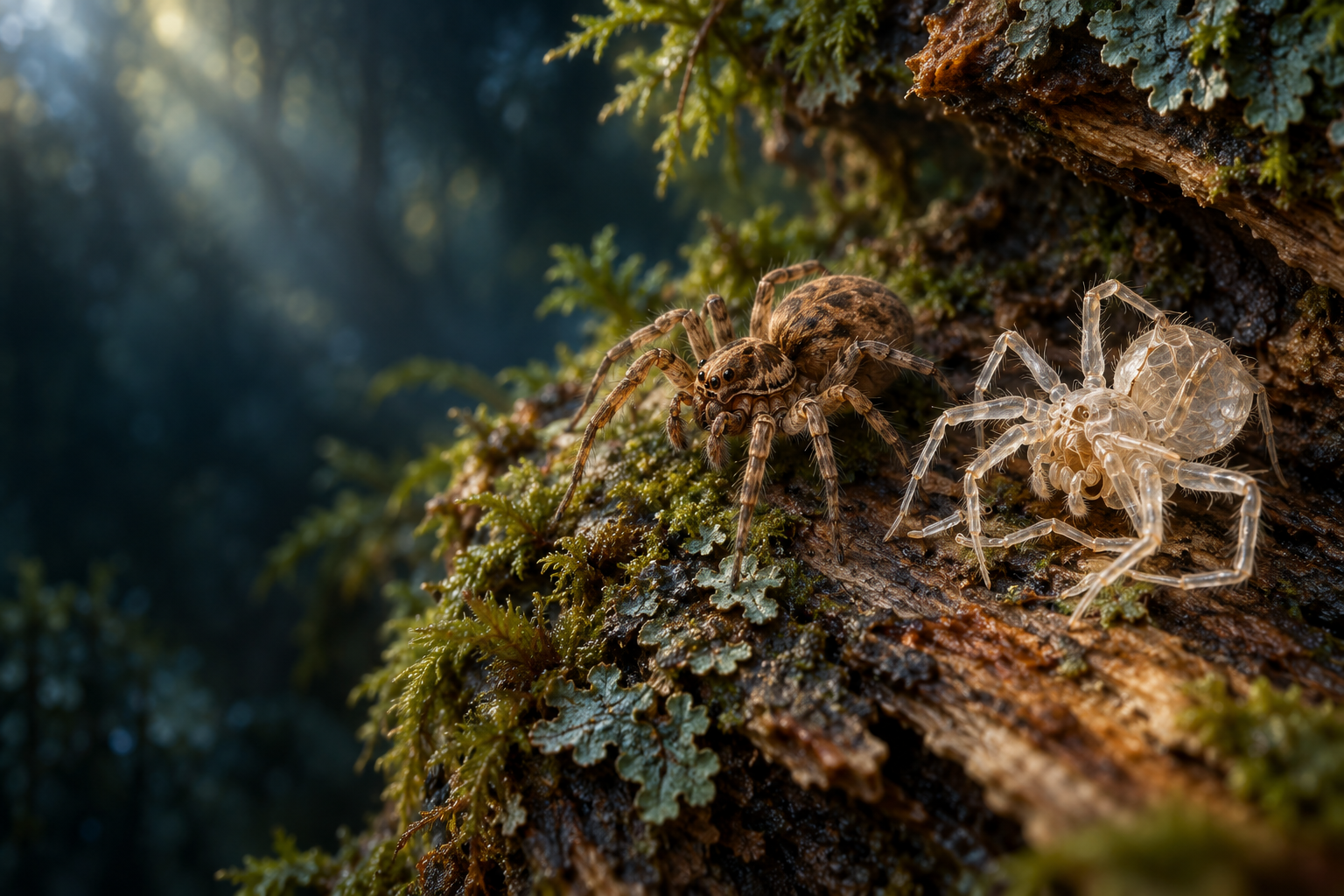
A new cuticle forms beneath the old one. During a moult the old covering is shed, allowing enlargement before the new cuticle hardens. This transition is a vulnerable phase. The empty cast can look remarkably like a complete spider, but it no longer contains the animal. Careful observation helps distinguish a shed covering from the spider itself.
Lifespans differ
A seasonally visible garden spider and a long-lived tarantula have different life histories. Species, sex and environmental conditions affect lifespan. Observations in human care should not be transferred unchanged to wild animals. We distinguish developmental sequence, observed longevity and the conditions under which an estimate was obtained, rather than treating every reported maximum as directly comparable.
Sources & image credits
- Australian Museum · Egg sacs, spiderlings and dispersal ↗
- Australian Museum · Spiders ↗
- Smithsonian’s National Zoo · Goliath bird-eating tarantula ↗
Sources checked: 1 November 2026. Figures and records carry the qualifications stated in each article.