Preparing for an encounter
Reproduction begins before eggs are laid. Males may signal when approaching a female, using movement, contact or vibrations depending on the group. Mature males transfer sperm with specialised pedipalps. An unusual movement in a web therefore need not be hunting: it may belong to an interaction between members of the same species.
Silk protects the eggs
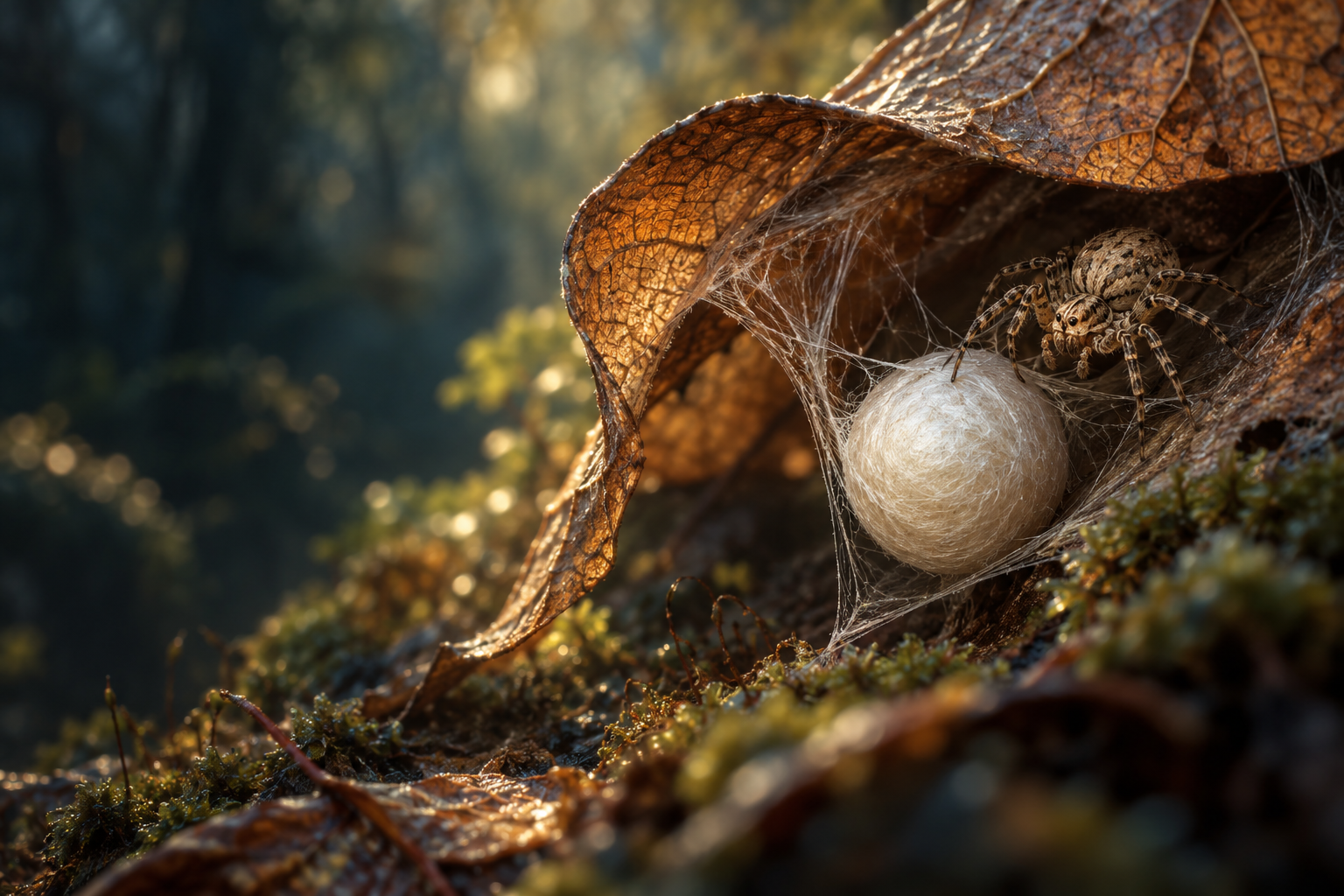
An egg sac encloses the eggs and offers protection from physical damage and environmental exposure. It is not an impenetrable fortress: parasites and predators can still reach the developing offspring. Some species hide their sacs, while others guard or carry them. Shape, location and egg number vary considerably, so a single large sac is not a universal measure of reproductive success.
Staying, carrying, dispersing
Wolf spiders offer a striking example: females carry the sac at their spinnerets and later carry young on their backs. Other spiders leave a completed sac behind. These strategies illustrate the diversity of care. A female defending offspring against disturbance shows context-dependent defence, not evidence of a fixed place in a ranking of the most aggressive spiders.
Sources & image credits
- Australian Museum · Egg sacs, spiderlings and dispersal ↗
- Australian Museum · Wolf spiders ↗
- Australian Museum · Spider structure ↗
Sources checked: 1 November 2026. Figures and records carry the qualifications stated in each article.