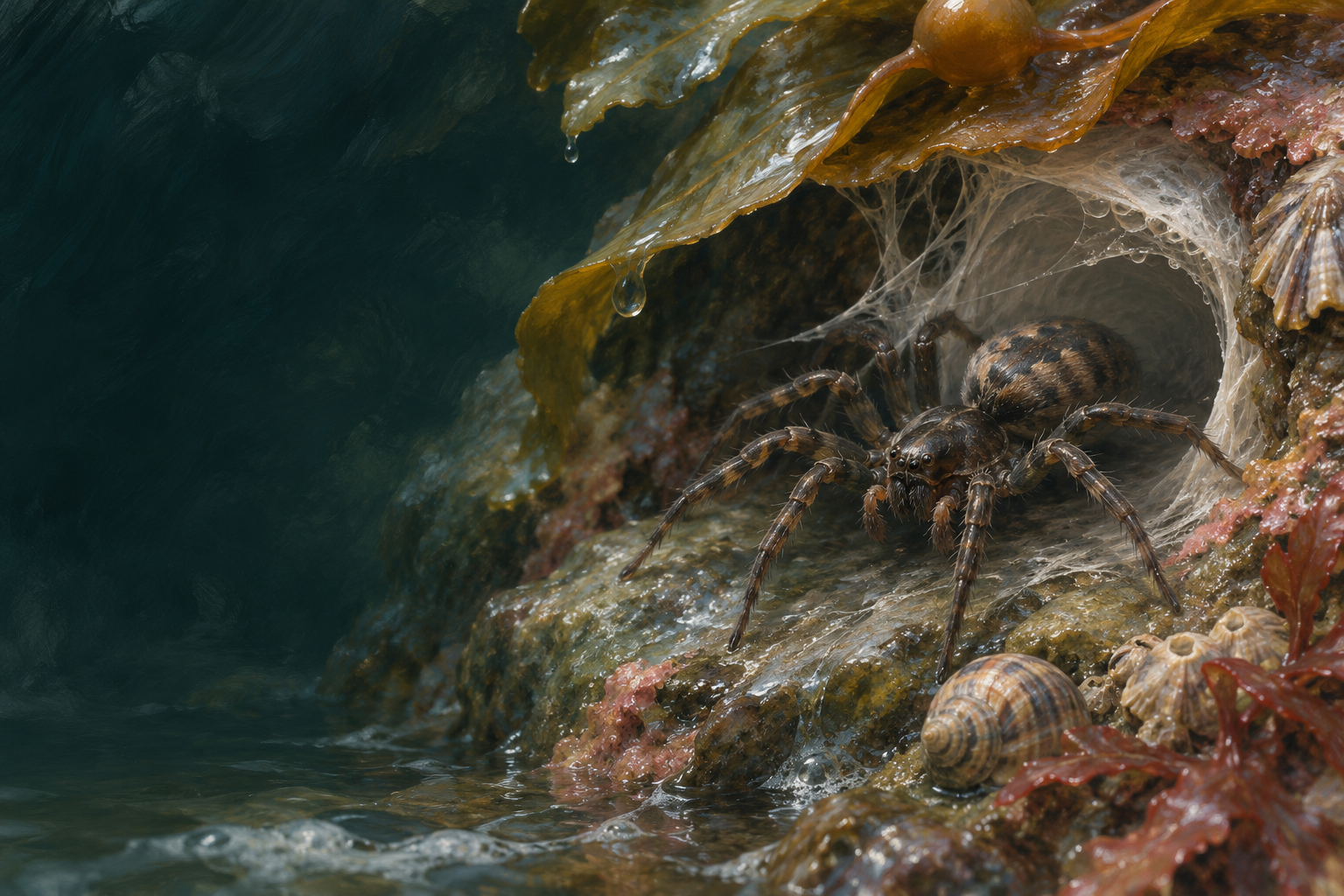
A home in the intertidal zone
Desis marina is known from New Zealand and New Caledonia. At studied New Zealand shores it inhabits cavities around the holdfasts of large kelp. Its home lies between land and regularly flooded space. The kelp is more than decoration: its structure and the shape of the coast influence which sheltered air spaces are available.
Submerged does not mean airless
When the tide rises, water can surround the retreat while air remains inside its cavities. The spider uses this trapped reserve. Survival depends on the refuge’s size and structure as well as the duration of flooding. A simple statement of depth would miss the spatial organisation that makes this apparently aquatic setting usable by an air-breathing animal.
Using oxygen sparingly
Respiration measurements found low oxygen demand under the conditions tested and tolerance of declining oxygen levels. These help explain the use of limited air reserves. They do not make the animal independent of oxygen. Temperature, body size and air volume all matter when researchers connect a laboratory trial with surviving a natural period of tidal flooding.
Comparing two underwater solutions
Comparison with Argyroneta aquatica is revealing. Both use air underwater, but the space and its role differ. Desis marina endures tidal flooding in a coastal refuge; the water spider maintains a diving bell among plants. One broad label would conceal two distinct combinations of behaviour, construction site and physical conditions rather than explain their similarities.
What do we know, and where are the limits?
Field studies and respiration measurements concern D. marina. Air reserves and low oxygen demand are documented; it has no fish gills and is not a free-swimming marine spider.
Sources & image credits
- World Spider Catalog · Desis marina ↗
- McQueen & McLay (1983) · How does the intertidal spider Desis marina remain under water for such a long time? ↗
- McQueen, Pannell & McLay (1983) · Respiration rates for the intertidal spider Desis marina ↗
Sources and classification checked on 3 November 2026. Scientific names and interpretations may change with new evidence.