Patches rather than imaginary horns
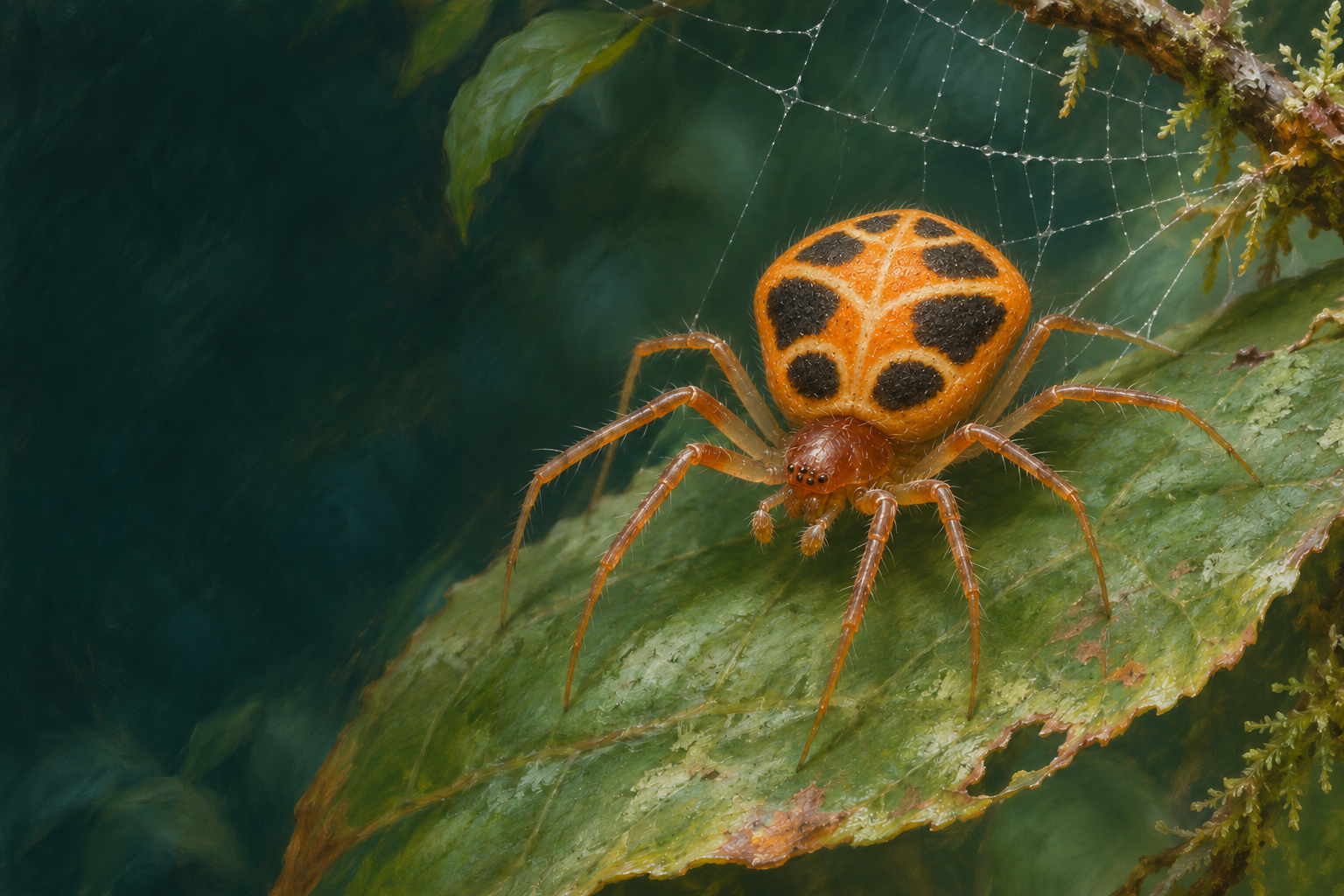
The species name directs attention to spots. A taxonomic key describes an orange abdomen bearing six or more separate dark patches. These are markings, not six large projections. The shield-like outline and contrasting pattern already create an unusual appearance; the patches belong to the pattern of the abdomen.
In the upper Amazon region
The technical literature associates Encyosaccus with the upper Amazon region, while the catalog lists several South American countries. Such entries assemble records rather than demonstrating uniform occupancy across all the intervening land. This portrait is a reminder of how little a spectacular photograph alone reveals about habitat use or abundance. The documented region provides a starting point for further questions.
Small differences, dependable names
Identification keys use less conspicuous characters alongside the dorsal pattern. In males, for example, the construction of the pedipalps matters. This explains why an attractive photograph is not always enough for a secure species identification. Taxonomic work connects the visible overall appearance with details revealed under magnification that can reliably distinguish spiders which otherwise look rather similar.
Little known is not automatically rare
Encyosaccus appears comparatively infrequently in general spider portraits. That describes its visibility in accessible accounts and our selection, not the size of its global population. The species has been scientifically described and included in revisions. Questions about preferred prey or population fluctuations remain much less clearly illuminated in the sources used here than its diagnostic body structure.
What do we know, and where are the limits?
Levi’s key describes six or more dark patches on an orange abdomen, not six projecting horns. Detailed ecological studies are limited in the sources reviewed here.
Sources & image credits
- World Spider Catalog — Encyosaccus sexmaculatus ↗
- Levi (2002) — Keys to the genera of araneid orbweavers of the Americas ↗
- Integrated Taxonomic Information System — Encyosaccus sexmaculatus ↗
Sources and classification checked on 3 November 2026. Scientific names and interpretations may change with new evidence.