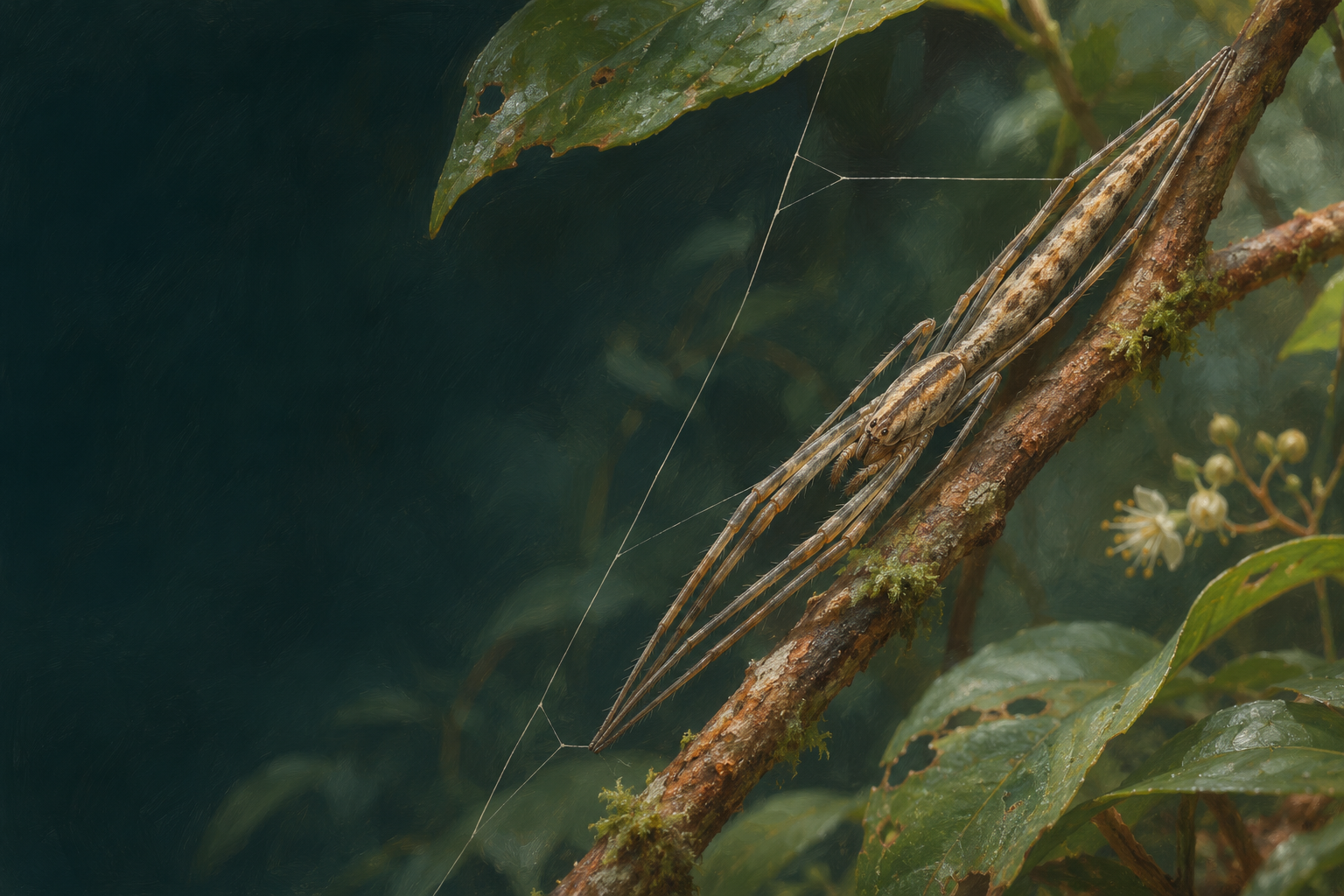
Few lines, real architecture
Simple webs with diverging capture lines have been studied in Miagrammopes animotus. Linear and looped portions of cribellate silk distribute material differently from a complete capture spiral. A small web is therefore not an unfinished version of a large one. Its arrangement helps determine where an insect makes contact and how silk is deployed.
A question of material investment
A research report on this species relates spider size to properties of capture threads. It raises a broader ecological question: how much material must an animal invest in operating a trap? Thread length alone cannot answer that question. The combed capture surface and the way it is distributed also belong to the investment in a web.
Moving threads in genus context
Studies of other Miagrammopes species describe spiders responding to prey by pulling, slackening and jerking their few threads. This explains how a seemingly simple trapping site can work dynamically. It offers useful comparative context for M. animotus, while leaving open which detailed movements have been observed directly in this particular species rather than its relatives.
Puerto Rico is not a rarity verdict
The World Spider Catalog lists Puerto Rico as the known range. Type material links the scientific name to a traceable museum specimen. Both are valuable, but neither supplies a count of living animals. Its inclusion recognises a less familiar architecture and scientific documentation, rather than awarding an unsupported rank among the world’s rarest spiders.
What do we know, and where are the limits?
A species-specific research abstract addresses web investment. Detailed hunting observations published in 1978 concern other Miagrammopes species and are identified here as genus context.
Sources & image credits
- World Spider Catalog · Miagrammopes animotus ↗
- Opell (1990) · Material Investment and Prey Capture Potential of Miagrammopes animotus Webs (meeting abstract) ↗
- Lubin, Eberhard & Montgomery (1978) · Webs of Miagrammopes in the Neotropics ↗
- Museum of Comparative Zoology · Miagrammopes animotus type specimen ↗
Sources and classification checked on 3 November 2026. Scientific names and interpretations may change with new evidence.