Protection made from silk
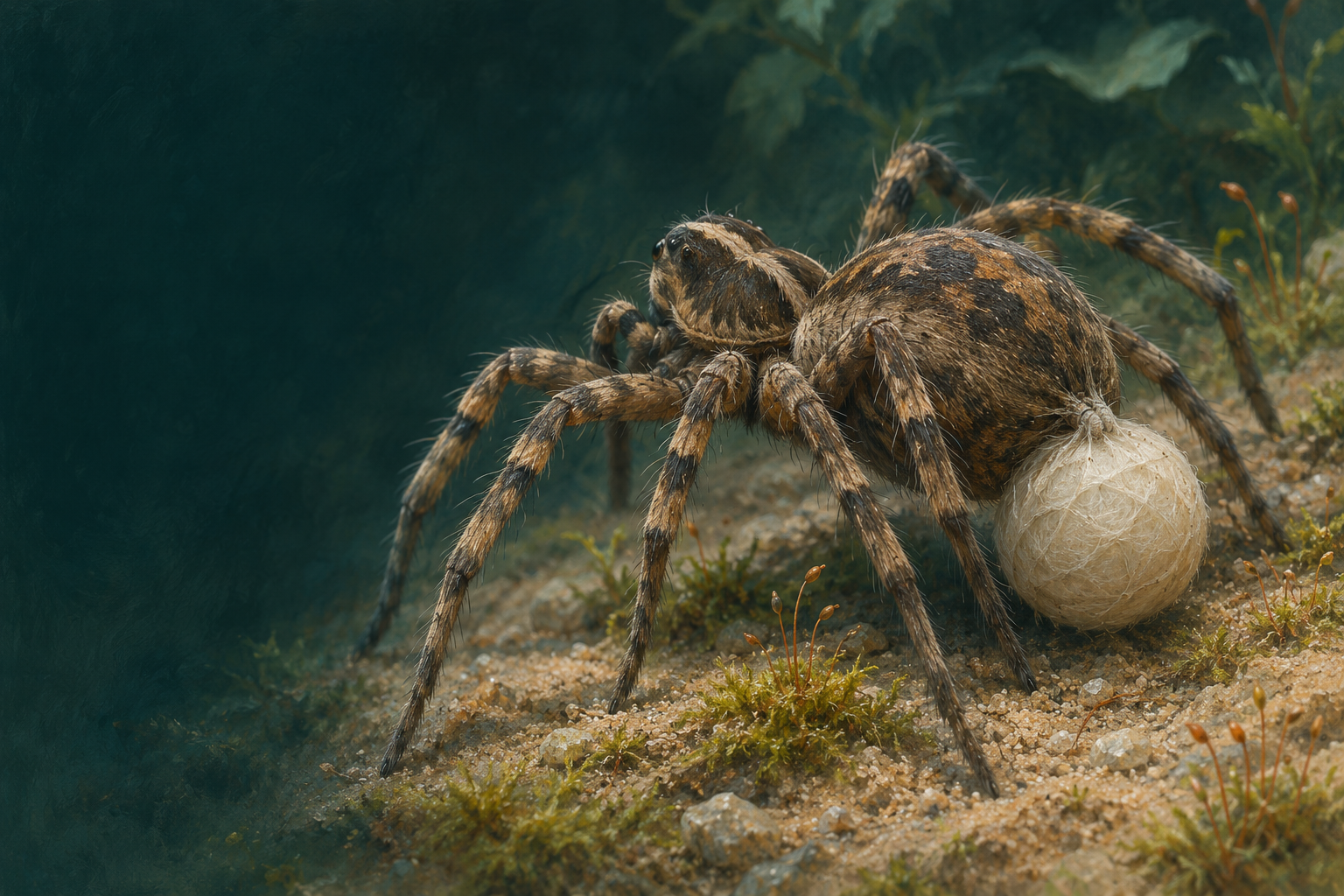
A silk egg sac helps protect eggs from physical damage and unsuitable moisture conditions. Its position varies, including a burrow, beneath bark or among plants. Some females remain nearby; others leave the sac in a protected place. No single pattern of care can be applied to every spider.
Wolf spiders carry their young
Female wolf spiders attach a round egg sac to their spinnerets. After hatching, spiderlings climb onto the mother’s back and remain there for a time. This combines mobility with protection. An unusual-looking abdomen in a photograph may therefore be covered in spiderlings rather than representing an abnormal adult body shape.
Helpers in a social nest
In social Stegodyphus dumicola, non-reproducing females also help provision young. A 2019 experimental study investigated physiological aspects of this intensive care. Food is regurgitated; the described way of life also includes offspring eventually consuming caregiving females. This is a specialised strategy of this group, not a general spider life cycle.
Not every cluster is a colony
Young garden spiders may initially cluster after emergence. The British Arachnological Society describes such groups that later disperse. Temporary association among siblings differs from a lasting social nest with shared provisioning. Useful descriptions ask how long the group lasts, how old its members are and what they actually do together.
Sources & image credits
- Australian Museum · Egg sacs, spiderlings and dispersal ↗
- Australian Museum · Wolf Spiders: courtship and parental care ↗
- 2019 experimental study · Physiological Adaptations to Extreme Maternal and Allomaternal Care in Spiders ↗
- British Arachnological Society · Young Garden Spiders ↗
Sources checked: 2 November 2026. Comparisons carry the qualifications stated in each article.