All topics
Spiders through the seasons
An observation guide for temperate Central Europe. Weather, elevation and microclimate shift encounters; this is not a universal calendar.
Explore the seasons ↓A guide for temperate Central Europe. Weather, elevation and species shift observation periods; this is not a worldwide calendar or a guarantee of sightings.
CENTRAL EUROPE
Spring: small beginnings
Mild days make activity on walls and young spiders in garden webs easier to notice. Timing depends on weather, elevation and species.
Where to look
Sunny walls, garden fences and sheltered vegetation edges. Zebra jumping spiders may hunt on surfaces by day; young garden spiders emerge in groups after overwintering.
What to notice
Watch from a distance and photograph without touching. Revisiting the same spot on several mild days reveals change better than one sighting. Do not blow groups of spiderlings apart or open egg sacs.
The zebra jumping spider↗The garden spider↗Growing means changing the covering.↗CENTRAL EUROPE
Summer: hunting among plants
Gardens and meadow edges provide different hunting sites. Time of day, dryness and vegetation structure influence what you notice.
Where to look
Inspect flowers, grass stems and webs from the path. Backlighting or natural dew can reveal orb webs; jumping spiders may be active on warm walls.
What to notice
Record time, weather, surface and behaviour. Compare a sunny edge with a shaded spot. Do not spray webs or add prey; the natural encounter is already worth watching.
The garden spider↗Hunting has many forms.↗Not every web is an orb.↗CENTRAL EUROPE
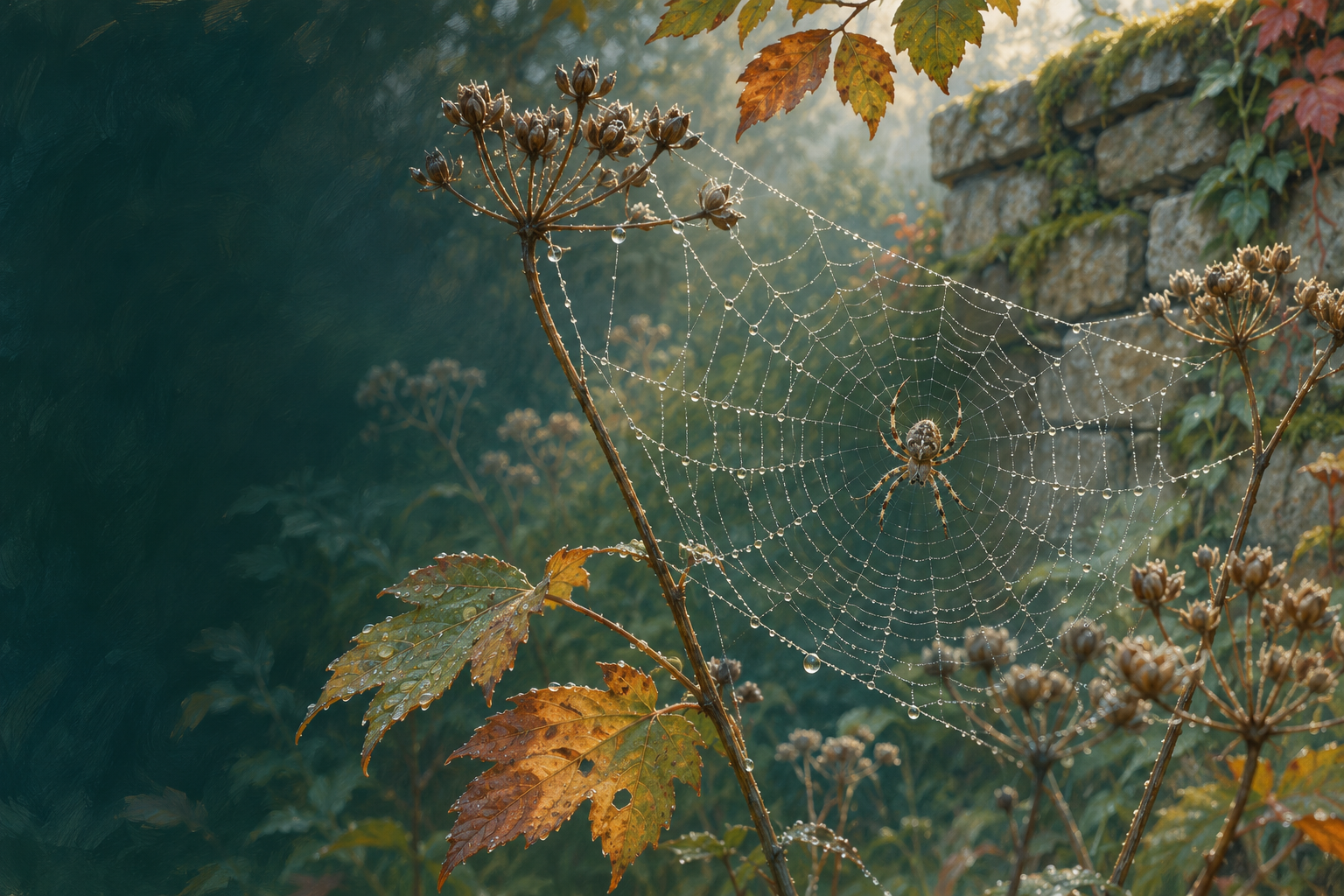
Autumn: webs and wanderers
Large orb webs and roaming house spiders often become conspicuous. More sightings do not automatically mean a larger population.
Where to look
Hedges and garden paths in morning light; quiet indoor corners and retreat entrances. In some house spiders, adult males search for females in late summer and autumn.
What to notice
Record movement and pauses without chasing the animal. Compare an established web with one wandering spider. Open windows, observation effort and weather also affect sighting counts.
House spiders and their funnel retreat↗The garden spider↗Look closely. Leave space.↗CENTRAL EUROPE
Winter: preserving refuges
Spiders overwinter at different stages depending on species and region. Even one species can vary; a quiet garden is not an empty garden.
Where to look
Observe accessible sheltered places on buildings and existing silk without lifting bark, litter or stones. Some animals may be active in mild weather; one sighting does not mark a general start of the season.
What to notice
Leave dry stems, litter patches and egg sacs undisturbed. Watch from outside and compare mild and cold days. Not every spider overwinters as an egg, and not every spider enters a house for winter.
The cellar spider in the corner↗Between heat and cold.↗Look closely. Leave space.↗